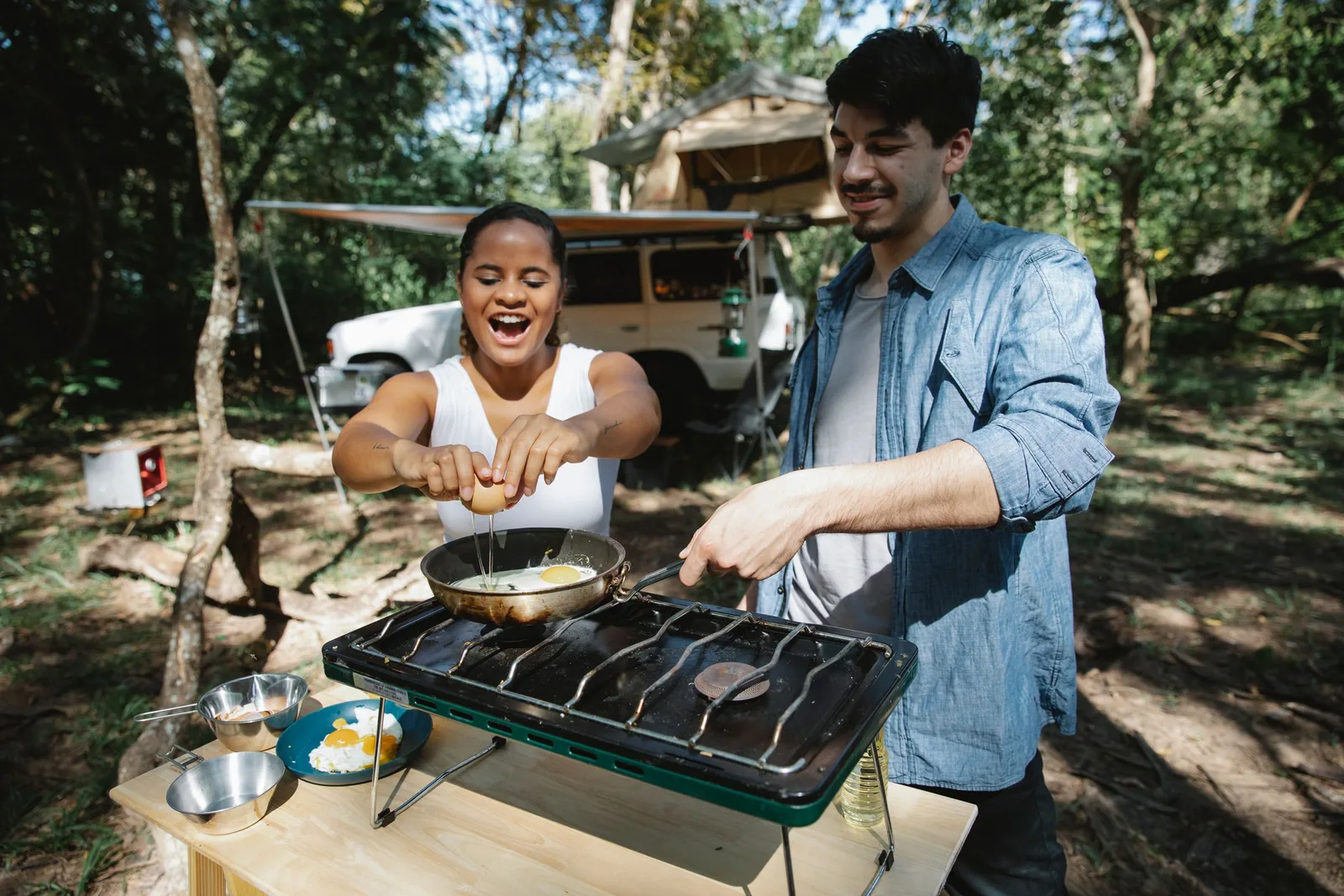
Camp Stoves & Cookware
The right camp stove depends on where you cook: a weekend car-camp table, a windy ridgeline, or a backyard picnic. Canister stoves are light and simple; liquid-fuel stoves can be easier in the cold or far from canister refills; two-burner tabletop stoves suit group meals. Cookware should match the burner size and pack space you actually have.
What to look for
- Fuel type and availability. Threaded canisters, Lindal-valve compatibility, white gas, or propane cylinders each have tradeoffs in weight, cold-weather performance, and whether you can buy fuel at the last grocery store on the way.
- Wind and simmer. A high boil-time number in still air may not hold up in a breeze. Look for a windscreen the maker allows (never enclose a stove in a way the manual forbids) and a valve that can hold a low simmer if you cook real meals, not only boil water.
- Stability and pot size. Wide pot supports help with a skillet or a full kettle. Nested cookware with a lid that doubles as a pan can save space; coatings need the same care as they do at home.
- Regulations. Many public lands restrict fires and sometimes stoves. Check the land manager’s current rules and practice Leave No Trace food handling and packing out fuel canisters.
Safety notes
Never use a camp stove, charcoal grill, or propane appliance inside a tent, vestibule, or vehicle. Carbon monoxide is colorless and can be fatal in enclosed spaces. Use stoves on a stable, non-flammable surface, keep a clear area around the burner, and change canisters or refill fuel away from ignition sources.
Selected references
- National Park Service, campfires and cooking
- Leave No Trace, outdoor skills and ethics
- CPSC, carbon monoxide information